BTIS • 2026 • Sole Product Designer• Shipped
Norbielink Dashboard
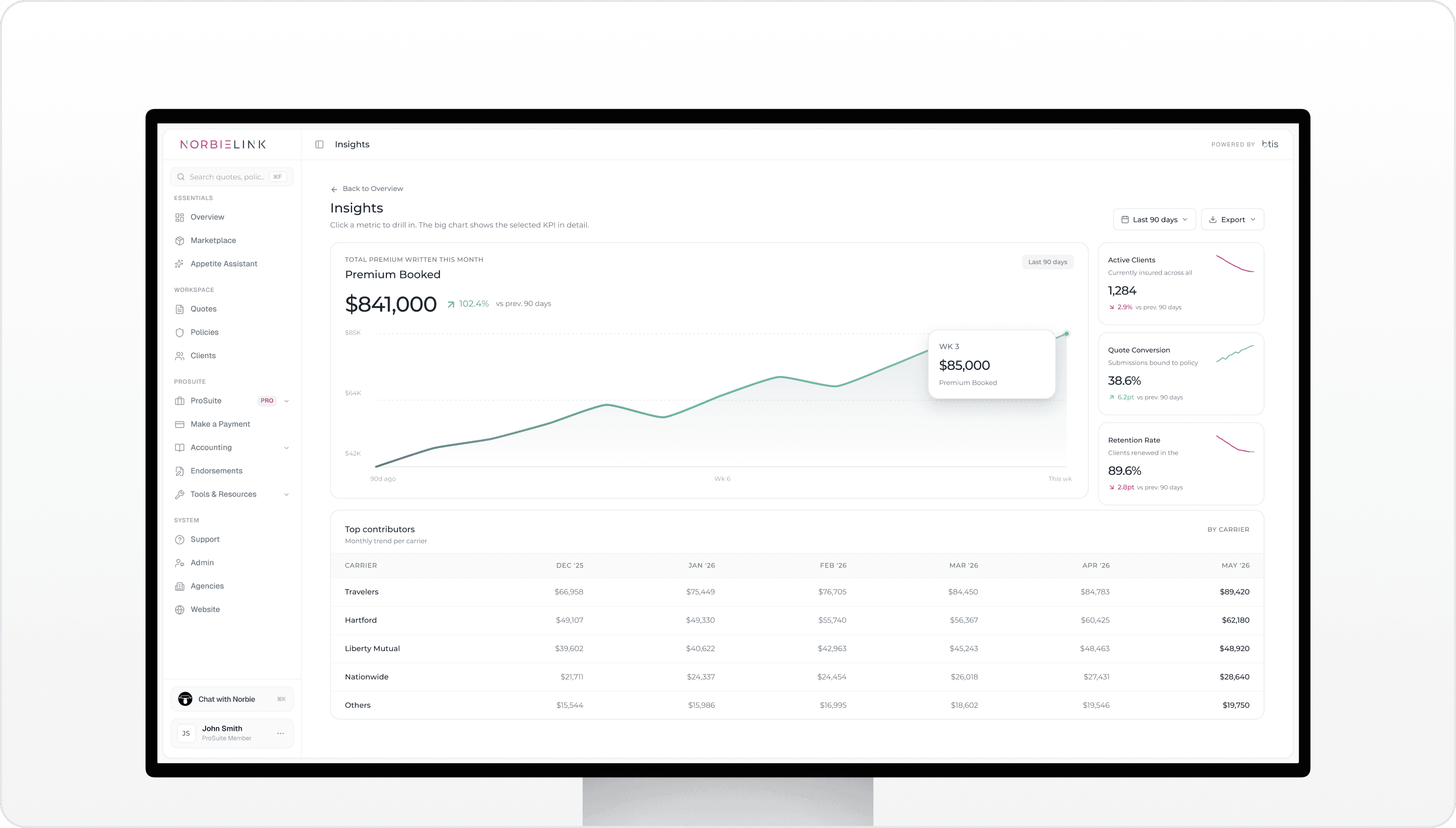
NorbieLink is an AI-native operating system for insurance agents, bringing quoting, client management, and policy workflows into one workspace.
As the sole designer, I shaped both the product and the system behind it—from AI workflows and enterprise experiences to the design system used to build and scale the platform.
Overview
Connecting Agents to Insurance Markets
Our company doesn't sell insurance directly.
We help independent agents access products from multiple insurance carriers.
NorbieLink was created to unify that workflow into one operational workspace.

NorbieLink connects agents, clients, and carriers through a single operational workspace.
Impact
Unifying Fragmented Insurance Workflows
Success wasn't measured by feature adoption alone.
We focused on reducing operational friction throughout the insurance workflow by measuring:
• Workflow consolidation
• Retrieval efficiency
• Submission quality
5→1
Tools Consolidated
15m→30s
Information Retrieval Time
↗32.1%
Invalid Submissions Prevented
Challenge 01
Insurance Workflows Were Fragmented Across Multiple Systems
Before NorbieLink, agents relied on carrier portals, email, spreadsheets, and internal tools to complete a quote.
Information lived in different systems, creating operational overhead and making it difficult to maintain a complete view of the customer.
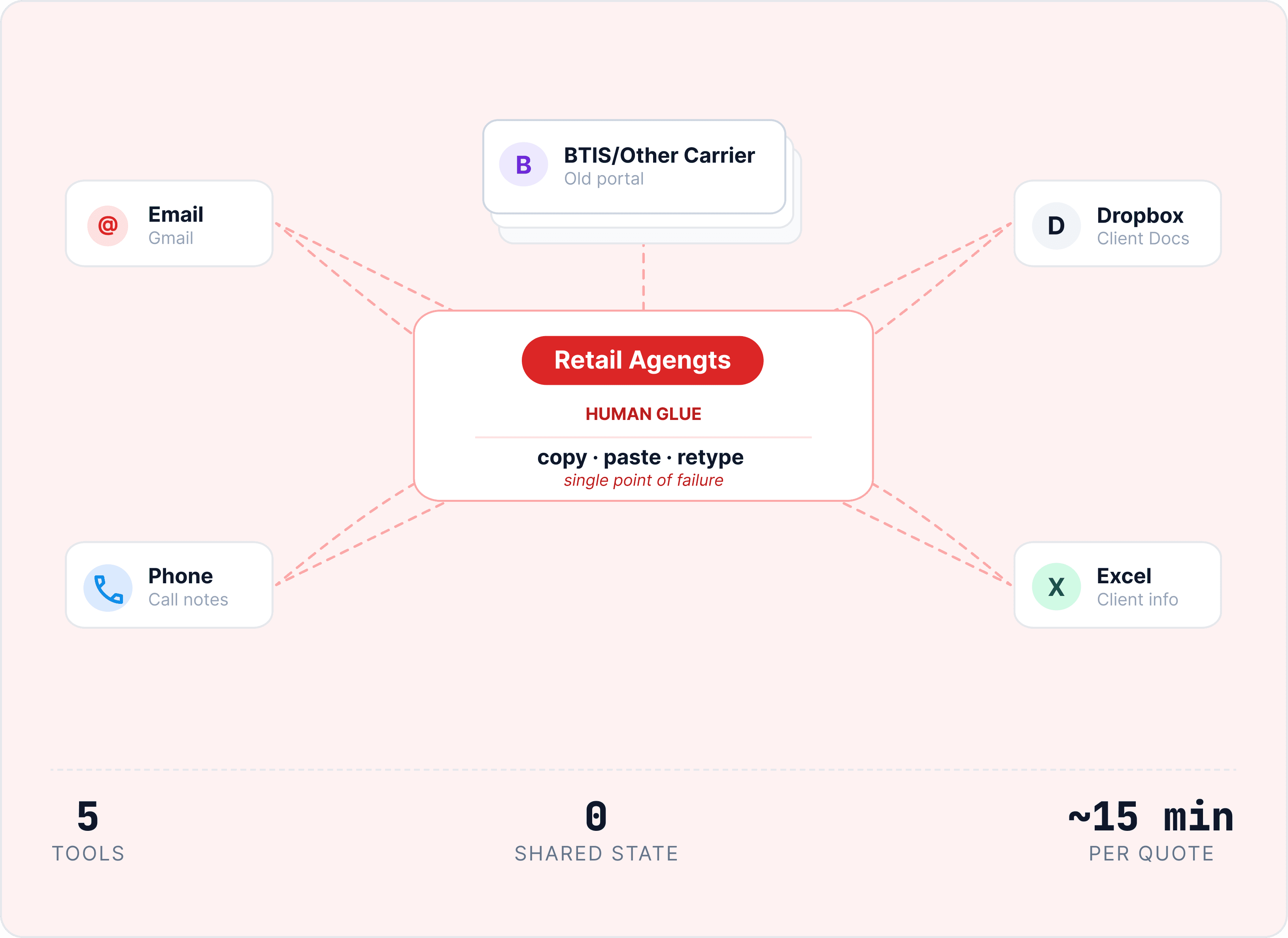
Before: Agents stitched together information across disconnected systems.
Solution 01 Unified Workspace
Creating a Single Source of Truth for Insurance Operations
Rather than optimizing individual tasks, I focused on unifying the entire insurance workflow.
Marketplace, Quotes, Policies, Clients, and Documents were brought together into a single workspace, giving agents one place to discover markets, manage policies, and serve clients.
After: Every client, quote, and policy became part of a shared operational workspace.
Challenge 02
Agents Needed Guidance, Not Just Information
Creating a single workspace solved fragmentation.
But agents still faced another challenge:
Agents still needed help navigating underwriting requirements, carrier appetite, and client context.
Finding information was no longer the problem.
Knowing what to do next was.
Not in our current appetite
We're not currently writing Commercial Auto in AR -
Arkansas. Try a different state, or ask Norbie to find a market.
Try a Different Combo
Ask Norbie
When agents hit a dead end, the system needed to explain why and recommend a next step.
Solution 02 Embedded Intelligence
From Information Access to Decision Support
To support decision-making, I evaluated three interaction models for Norbie.
Each model approached the problem differently:
Freeform chat prioritized flexibility.
Form assistants prioritized predictability.
Retrieval-first prioritized operational accuracy and traceability.
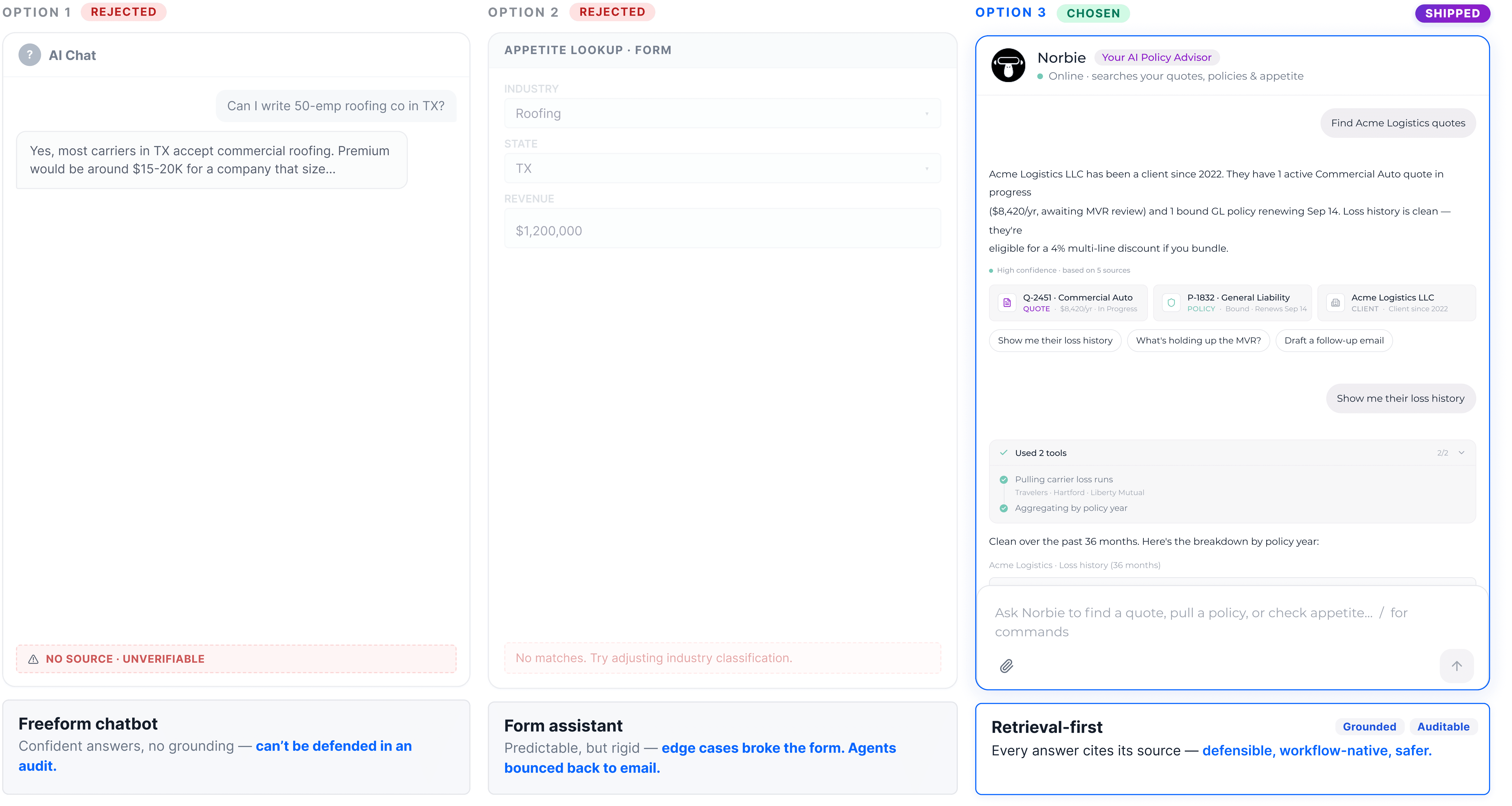
After testing each approach with underwriting and engineering teams, We selected a retrieval-first model because every recommendation could be traced back to operational data, policy context, and supporting evidence.
Solution 02 Embedded Intelligence
Designing For Decisions, Not Conversations
Rather than creating a standalone chatbot, I designed Norbie as an operational assistant embedded directly into the workflow.
Every response is grounded in operational data, connected to supporting evidence, and designed to help agents move toward action.
User case 01:Uploading a loss run
User case 02:Finding acme quotes
The goal wasn't conversation.
It was helping agents understand what happened, why it happened, and what to do next.
Solution 02 AI Response Design
Making Operational States Clearer
Through underwriting reviews and workflow testing, we found that agents often struggled most when the system couldn't complete a task.
The problem wasn't the failure itself.
It was understanding why the failure occurred and what should happen next.
Scenario · 01
Agent tries to bind without MVR.
× EARLY RESPONSE
“I can’t help with that.”
↓
✓ REVISED RESPONSE
“Hippo requires an MVR before binding commercial
auto. Upload MVR now or continue with another
carrier.”
WHY IT WORKED BETTER
• Explained the operational constraint
• Preserved workflow momentum
• Surfaced next actions immediately
Scenario · 02
No matching appetite found.
× EARLY RESPONSE
“No appetite found.”
↓
✓ REVISED RESPONSE
“No quotes match in TX based on current appetite
rules. Expand to CA or adjust industry
classification?”
WHY IT WORKED BETTER
• Clarified why retrieval failed
• Reduced uncertainty
• Prevented workflow dead ends
Scenario · 03
Carrier API unavailable.
× EARLY RESPONSE
“Try again later.”
↓
✓ REVISED RESPONSE
“Hippo API is temporarily unavailable. Use cached
quote from 2d ago or continue with another
market?”
WHY IT WORKED BETTER
• Differentiated system failure from user failure
• Preserved operational continuity
• Reduced restart frustration
I redesigned response patterns to explain operational constraints, surface context, and recommend next actions.
Challenge 03
Recommendations Needed Context
Retrieval improved access to information, and decision support helped agents take action.
However, recommendations were only as useful as the context behind them.
Quotes, policies, documents, and activity history often existed across different parts of the platform, making it difficult to understand the complete client picture before making a decision.
Solution 03 Client Intelligence
Building A Unified Client Workspace
To provide richer context for both agents and AI-assisted recommendations, I designed a centralized client workspace that connected policies, quotes, documents, contacts, and activity history in one place.
This created a single source of truth around each client, reducing information gathering and supporting more informed decisions.
Bringing client information together to support faster, more informed decisions.
Solution 03 Client Intelligence
Preserving Operational Context
Policies and quotes captured what happened.
Notes and activity provided the context behind it.
Together, they created the operational context needed for more informed decisions and AI-assisted recommendations.
Activity history preserved the context behind policies, quotes, and underwriting decisions.
Norbielink System
Designed on a Shared System
As NorbieLink expanded across quoting, client management, AI workflows, and administrative tools, consistency became increasingly difficult to maintain.
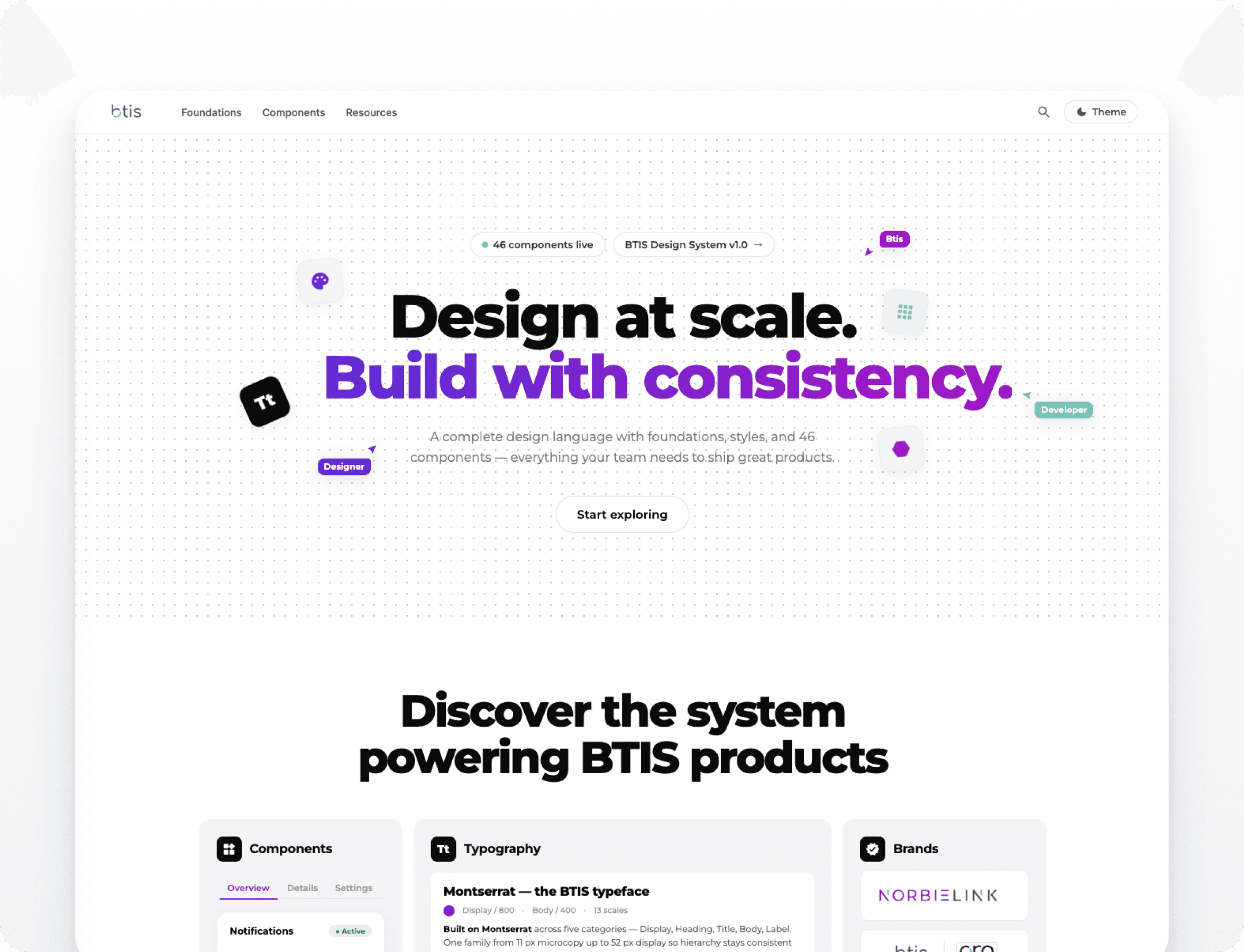
To support rapid iteration as a team of one, I built a dedicated design system that unified product decisions across design, development, and AI-assisted workflows.
The system became the foundation behind every NorbieLink experience.
What‘s next?
Today, agents still need to search for information, evaluate opportunities, and determine what action to take next. The future opportunity is shifting from reactive workflows to proactive assistance.
The long-term vision isn't building a better dashboard.
It's creating an operational partner that helps agents stay ahead of their work.
Up Next
Interested in how I navigated the challenge?
Hit me up for a deep dive into the project.